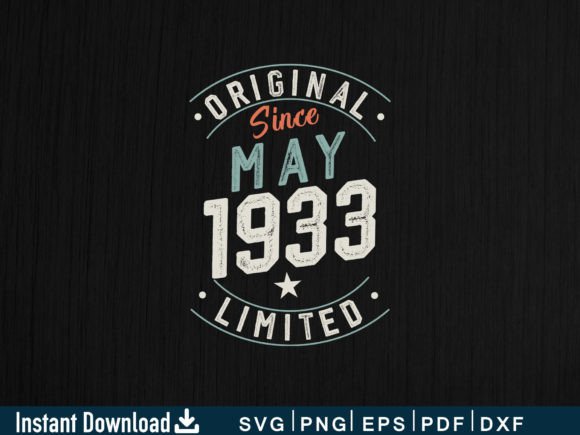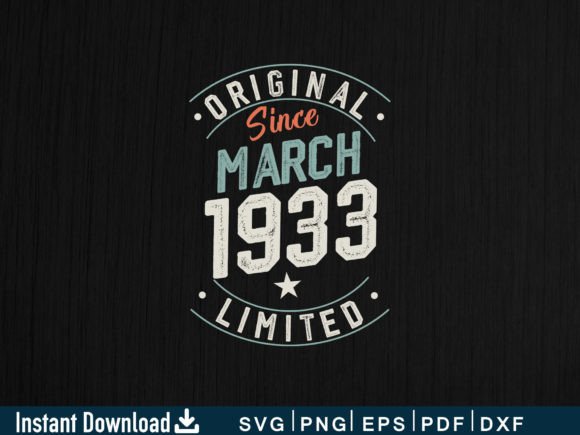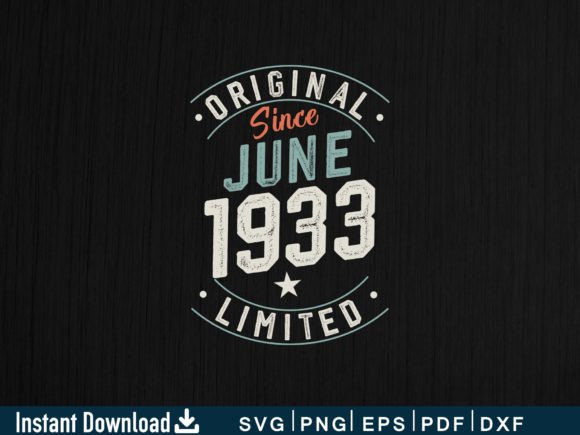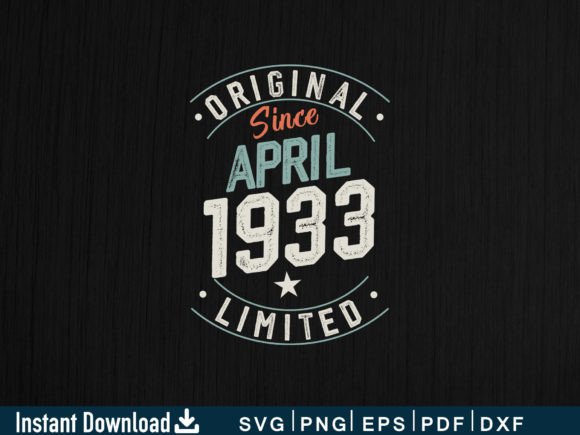
Reviewing the April 1933 Gifts 91st Birthday Design
As a designer who spends more time at the embroidery machine than away from it, I approach every new digital embroidery file with a mix of curiosity and caution. We all know that what looks crisp on a screen can sometimes turn into a thready mess on fabric. Recently, I took a close look at the April 1933 Gifts 91st Birthday Gift design to see if it holds up for real-world production. This isn't just about downloading a graphic; it's about determining whether this asset can become a reliable part of your craft business inventory or a cherished handmade product for a client.
The first impression of this design is one of nostalgic celebration. It carries a specific mood tailored for a very unique milestone: turning 91. In the world of custom apparel and personalized gifts, finding designs that respect the longevity of a life well-lived without feeling dated or generic is a challenge. This piece fits squarely into the Crafts and Graphics categories but demands careful handling to ensure the final output honors the recipient. The layout suggests a strong typographic focus, which is common in birthday occasions, but the execution determines whether it feels like a premium boutique item or a rushed afterthought.
Visual Personality and Project Fit
When evaluating the April 1933 Gifts 91st Birthday Gift for a potential project, the visual personality stands out as both commemorative and versatile. It is designed to be a focal point. I immediately imagined this working beautifully as a central chest print on a high-quality sweatshirt or as a statement piece on a canvas tote bag design. The theme leans heavily into heritage, making it an ideal candidate for family reunions or specific holiday embroidery where generations gather.
For an Etsy seller or small shop owner, the value of this design lies in its specificity. While many birthday files are one-size-fits-all, this targets a narrow but deeply meaningful demographic. If you are creating a personalized gift for a grandparent, the emotional resonance of seeing their birth year and current age stitched out adds significant perceived value. However, because it is a graphic-heavy concept, the transition from screen to stitch requires attention to how the lines translate into satin stitch, fill stitch, or running stitch elements. A design that relies too much on tiny details might lose clarity when scaled down for a pocket logo or a hat.
Real-World Application Scenarios
To truly test the viability of the April 1933 Gifts 91st Birthday Gift, I walked through a few realistic production scenarios. Imagine a client requests a custom embroidered apron for a grandmother who loves to cook. This design would sit perfectly above the pocket, provided the text remains legible. Alternatively, consider a baby embroidery project—perhaps a "Great Grandma" onesie for a new arrival in 2024. Here, the scale becomes critical. The design needs to be small enough not to overwhelm a tiny garment but large enough to retain its integrity.
Another strong use case is in the realm of embroidered patch creation. If you are running a small batch of commemorative patches for a family event, this graphic could serve as the core motif. Patches allow you to control the backing and stabilizer more rigidly than soft garments, often resulting in a cleaner finished product. For those selling printable mockups alongside physical goods, this design offers a clear narrative for marketing materials, helping customers visualize the sentiment before they buy.
In terms of commercial embroidery, this file could be a steady seller during specific months leading up to spring birthdays. However, its utility extends beyond just t-shirts. Think about home decor: a pillow cover or a kitchen towel featuring this milestone year could be a thoughtful housewarming or birthday present. The key is matching the density of the design to the weight of the fabric. Heavy denim or twill will support denser stitching better than a lightweight poly-cotton blend.
Technical Considerations and Fabric Challenges
While the aesthetic appeal is evident, the technical execution is where the real work begins. When working with anniversary or birthday-themed graphics, we often encounter issues with small lettering and dense areas. If the April 1933 Gifts 91st Birthday Gift includes fine dates or small celebratory text, these elements are vulnerable on textured fabrics. A loopback french terry sweatshirt, for instance, has a surface that can swallow tiny stitches, making the year "1933" look blurry.
You must also consider the hoop size constraints. If you are planning to embroider this on a cap or a curved surface, the design's width and height must fit within the available hoop without distortion. Curved surfaces introduce stretch and pull; a design that is too wide or has unbalanced stitch density can cause the fabric to pucker, ruining the handmade presentation. Furthermore, dark fabrics present a contrast challenge. If the design relies on light thread colors, ensure your thread colors are vibrant enough to pop against navy or black backgrounds. Conversely, if the design is intended for light fabrics, check that there are no open gaps that might reveal the material underneath in an unflattering way.
Stabilizer choice is non-negotiable here. For a project of this nature, especially if it involves a lot of fill work, a cut-away stabilizer is often safer than tear-away to prevent long-term distortion. This is crucial for items that will undergo frequent washing, such as t-shirts or tote bags. You want the design assets to last as long as the garment itself.
Maximizing Value and Professionalism
The ultimate goal of using a file like the April 1933 Gifts 91st Birthday Gift is to enhance your brand consistency and customer trust. A sloppy stitch job on a sentimental item can damage your reputation as a maker. Therefore, the clarity of the stitching directly impacts the product value. Customers paying for a custom 91st birthday item expect perfection. They are buying not just a shirt, but a memory.
To ensure professionalism, always test the design on scrap fabric first. This allows you to check the stitch density and see how the machine handles the transitions between color blocks. It is also wise to test the design in black and white mockups to verify that the contrast works even without color cues. Does the shape hold up? Is the hierarchy of information clear? These questions determine whether the design will engage buyers or confuse them.
Finally, a note on licensing and commercial use. Since this falls under digital downloads for occasions, always confirm the specific license terms provided by the creator before selling finished items or including it in a bundle for other creative entrepreneurs. Some files are for personal use only, while others allow for unlimited commercial production. Knowing this distinction protects your small shop product line from legal headaches.
Final Verdict for Makers
The April 1933 Gifts 91st Birthday Gift is a promising addition to a designer's library, particularly for those specializing in milestone celebrations and family-oriented goods. Its strength lies in its emotional specificity, but its success depends entirely on the skill of the operator and the quality of the materials used. By respecting the limitations of fabric texture, choosing the right stabilizer, and testing thoroughly, you can transform this digital graphic into a tangible heirloom. Whether you are an experienced decorator or a hobbyist looking to elevate your gift-giving, this design offers a solid foundation for creating meaningful, high-quality embroidery projects.